


Introduction
Object counting is an essential task in various fields, including logistics, agriculture, security, and environmental analysis. However, relying on manual methods for this task often results in issues such as lack of precision, reduced efficiency, and limitations in denser or more complex scenarios. In recent years, advanced technologies like artificial intelligence (AI) and digital image processing have revolutionized this task by offering faster, more accurate, and scalable solutions.
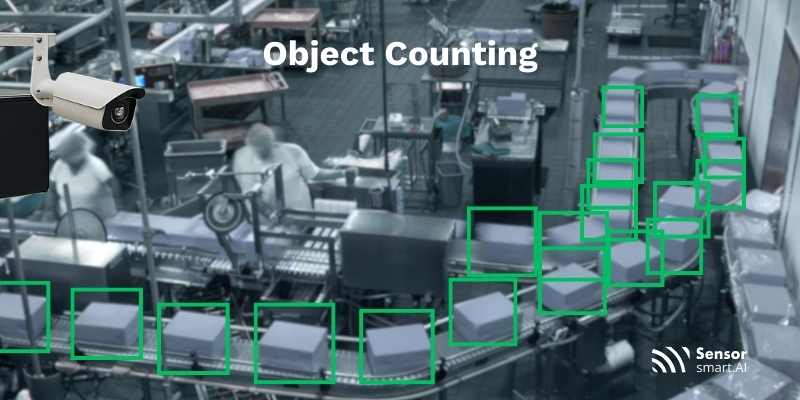
The Technological Evolution of Object Counting
Over the years, object counting has undergone significant transformation. Previously limited to manual labor or rudimentary tools, advancements in technologies such as convolutional neural networks (CNNs) and image processing methods have opened up new possibilities. Today, solutions like high-definition cameras and segmentation software allow for object identification and counting with unmatched precision.
Sophisticated algorithms in digital image processing enable the analysis of photos or videos to segment and identify objects. A study conducted by Pires, Souza, and Souza (2015) demonstrated the efficacy of using Matlab® software, which employs digital masks to identify objects in high-density images. This approach has been extensively applied in fields such as medicine, agriculture, and industrial engineering.
Artificial Intelligence and Neural Networks: A Technological Leap
Convolutional neural networks (CNNs) are a key innovation in the field of object counting. These AI architectures are specifically designed to process visual data, such as images and videos, enabling machines to learn to identify, count, and even categorize objects automatically.
A recent study by Arruda et al (2021) utilized CNNs to address complex scenarios, such as densely populated images. The system delivered results that outperformed conventional methods, even in challenging situations involving occlusion or variable lighting. The advantage of this model is its ability to function in contexts where purely rule-based methods fail, making it suitable for various industrial and commercial sectors.
Crowd Counting and Its Practical Applications
One specific application of object counting is crowd counting at events and public spaces. This task requires technologies that combine precision and robustness, as these are environments with high population density and significant movement.
Researchers like Santos, Palazine, and Souza (2024) conducted studies reviewing crowd counting methods involving cameras, drones, and smartphone sensors. The importance of accurate data in this context goes beyond logistics—it plays a crucial role in ensuring safety and regulatory compliance, especially at large-scale events. The use of drones equipped with AI to fly over densely populated areas and gather real-time data is one of the most promising solutions in the market today.
International Study: T-Rex Model and a New Era of Counting
T-Rex stands out for its zero-shot capabilities, meaning it can manage objects previously unseen in its training, making it incredibly versatile. This study has applications spanning from agriculture to commercial inventory and even environmental research. The model achieved state-of-the-art results in various benchmarks, showcasing how AI-based technologies still have much to contribute in the future.
Challenges and Future Perspectives in Object Counting
- Occlusion: When objects are partially hidden behind others, even advanced algorithms can struggle to deliver accurate counts.
- Lighting Variations: Changes in lighting conditions between images can impact counting accuracy.
- Complexity of Integration: Adopting these advanced systems still requires powerful infrastructure and skilled labor to operate and maintain them.
Conclusion
The future of object counting is undoubtedly promising. As the development and accessibility of such systems expand, their applications are expected to become common not only in industry but also in our daily lives.