


Optimizing logistics and efficiently managing loads are constant challenges in industries that rely on heavy transport, such as mining, construction, and port logistics. Truck load analysis, traditionally a manual and error-prone process, has gained a new dimension with the use of artificial intelligence (AI) and video analytics. These innovations not only increase operational accuracy but also provide strategic insights, reduce costs, and improve transparency.
Through this technology, it is possible to detect and measure load volumes with extreme precision, monitor trucks in real time, and simultaneously combat fraud, bottlenecks, and inefficiencies. Globally, companies adopting AI-based technological solutions are ensuring a more strategic, efficient, and competitive logistics approach compared to traditional methods.
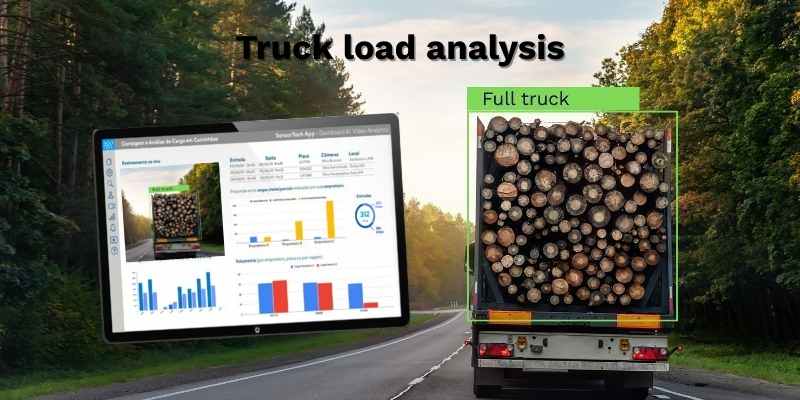
Benefits of Smart Load Analysis
The adoption of truck load analysis systems based on AI offers direct and measurable benefits for various industries. Below are the main advantages:
Detecting Failures and Increasing Productivity:
AI solutions allow for the identification of trucks with loads below the expected standard or even empty, optimizing the logistics flow and ensuring that every trip generates a significant financial return.Precise Volume Measurement:
The combination of advanced sensors and analytical algorithms allows the detailed measurement of transported loads, ensuring strict volume control.Fraud Reduction:
AI can identify inconsistencies in transported loads, incorrect declared volumes, or even attempts to manipulate data.Simplified Automation:
With direct integration into scales, automated gates, and access control systems, it is possible to reduce dependence on manual processes, minimizing human errors.Detailed Reports and Insights:
The collected data is presented in a structured and visual manner, with dashboards detailing schedules, transported volumes, and the performance of contractors or logistics operators.
Technologies Behind Load Analysis
The implementation of truck load analysis systems is based on a set of advanced technologies:
1. License Plate Recognition (LPR)
Through smart cameras and optical character recognition (OCR) algorithms, the systems automatically identify and register truck plates. This functionality streamlines vehicle entry and exit control and enables data cross-referencing, such as routes, frequencies, and schedules.
2. Loaded or Empty Truck Detection
One of the most revolutionary features of this technology is its ability to identify, in real time, whether a truck is empty or loaded. This eliminates unproductive trips and helps redistribute vehicle usage more efficiently.
3. Volume Analysis with Advanced Sensors
Laser sensors and other 3D scanning technologies ensure highly accurate measurement of the volume of transported materials. In low-visibility conditions, such as rain or dust, these solutions remain reliable.
4. Customized Dashboards
Visual and intuitive reports help companies monitor KPIs (Key Performance Indicators), identify bottlenecks, and make real-time decisions.
Practical Applications in Brazil and Beyond
- Mining: Managing extraction and transport of minerals such as iron ore and bauxite to ensure environmental compliance and operational gains.
- Construction: Monitoring loads on construction sites, focusing on the optimization of sand, gravel, and concrete transportation.
- Port Logistics: Managing the flow of trucks in grain or fertilizer terminals, ensuring shipping schedules are met.