


Introduction
Object counting on production lines is essential and directly impacts operational efficiency and profitability. With technological advancements, this task, which formerly depended on human observation and manual processes, now benefits from automation and artificial intelligence. Let’s explore how these innovations are shaping the future of manufacturing and industrial production.
The Importance of Object Counting in Industry
In an industrial environment, accurate object counting is critical to maintain product quality and ensure smooth internal processes. This affects not only quality control but also internal logistics, inventories, and final customer satisfaction. Companies investing in effective counting systems gain a significant competitive edge.
Impact on Logistics and Inventory
Accurate counting enables companies to maintain more effective inventory control, crucial for logistics. Balancing demand and supply is supported by precise data, ensuring no excess or deficit in stock, both detrimental to profitability.
Modern Technologies in Object Counting
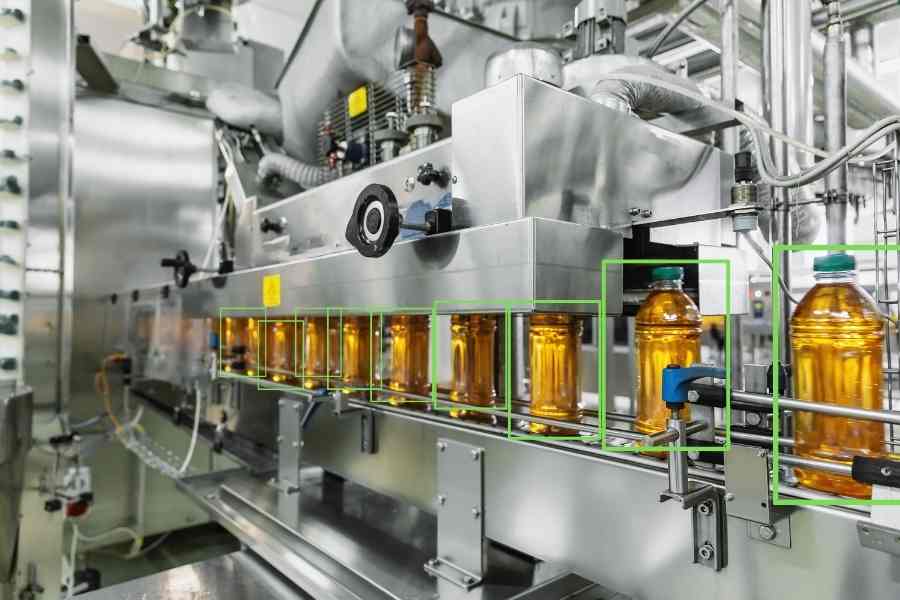
Recently, industrial automation has rapidly evolved, incorporating technologies like computer vision, advanced sensors, and artificial intelligence. For example, computer vision uses cameras and algorithms to identify and count objects precisely and quickly. This reduces human errors and increases productivity and overall operational efficiency.
Computer Vision
A significant rising area is computer vision, allowing high-definition image capture for real-time AI analysis. Computer vision systems are widely adopted for counting and inspection, increasing accuracy and reducing operational costs.
Practical Implementations
Companies have implemented computer vision in production lines to improve process accuracy. Technology enables the identification of moving objects, crucial in high-speed production lines, reducing the need for human intervention.
Artificial Intelligence
AI applications in industrial processes allow for the analysis of large data volumes, providing insights into production line efficiency. With machine learning algorithms, predicting failures and conducting predictive maintenance becomes possible, thus optimizing workflow.
Machine Learning in Counting
AI, especially machine learning, is used to train counting systems to identify and differentiate objects in various contexts, including variations in color, size, and shape, enhancing accuracy.
International Study:
An international study, published on www.journals.elsevier.com, analyzed computer vision technologies in production lines specializing in nanotechnology. This study highlights how the precision and speed of nanometric particle counting significantly improved, resulting in lower waste rates and better quality controls.
Benefits of Automated Object Counting
Transitioning to automated object counting systems offers numerous benefits, including cost reduction due to fewer errors, increased worker safety by reducing repetitive, potentially hazardous tasks, and improved inventory accuracy. This leads to leaner, more efficient operations.
Safety Improvements
With less human intervention in monotonous, repetitive tasks, workers face fewer risks, leading to fewer accidents and improved occupational health.
Efficiency and Productivity
Automated machines are not only faster than the human eye but also immune to fatigue, significantly increasing total production line productivity.
Implementation Challenges
Despite the clear advantages, implementing automated counting systems isn’t without challenges. Initial costs, the complexity of integrating new systems into existing production lines, and the need for proper operator training require attention. Additionally, employee resistance to change is a barrier that needs strategic management.
Cost and Integration
Initial installation costs and challenges in integrating new technologies with existing systems can be high, requiring meticulous financial and technical planning.
Change Management
Cultural change within organizations, where employees need to adapt to new working methods, is a critical challenge. Effective training programs and communication are essential to facilitate this transition.
Future of Object Counting in Industries
The future of object counting is closely linked to continuous technological evolution. Advances in AI and machine learning promise even more precise systems that can learn and adapt to new production conditions automatically. Furthermore, integrating with Internet of Things (IoT) systems could provide higher levels of automation and real-time monitoring, leading to the creation of truly smart factories.
IoT and Smart Factories
The fusion of IoT with object counting provides real-time data for production management. Connected sensors will continuously transmit information about production line status, allowing instant adjustments when necessary.
Continuous Adaptation and Learning
Machines’ ability to learn from new data will enable them to continuously improve their accuracy and efficiency in object counting, adapting to product variations and market demands.
Conclusion
In an increasingly competitive world, object counting on production lines plays a crucial role in industrial efficiency. Adopting modern technologies like AI and computer vision ensures not only the desired precision and speed but also promotes constant innovation within companies. As we have seen, improving this practice can lead to significant gains in productivity, quality, and customer satisfaction. Access the mentioned study for more detailed insights into practical implementations and real results in modern industry.