


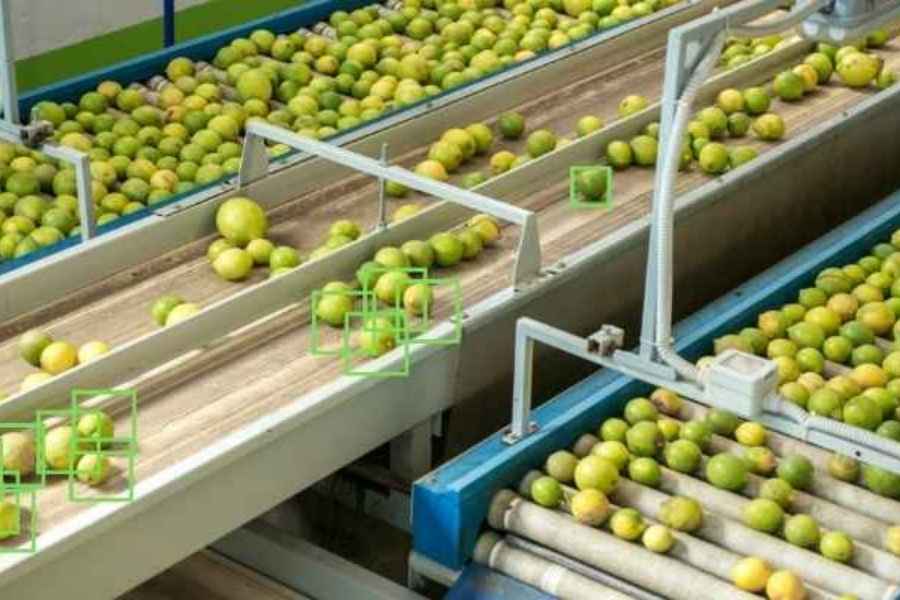
The pursuit of efficiency, quality, and cost reduction has always driven the evolution of the manufacturing industry. Amid the so-called Industry 4.0, one technology has gained exceptional prominence: Computer Vision. By automating traditionally manual tasks, such as counting objects on production lines, this technology completely transforms the manufacturing environment, eliminating human errors and elevating productivity and quality control to unprecedented levels.
What is Computer Vision?
Computer Vision is a branch of Artificial Intelligence that enables machines to interpret and process images from the real world. High-resolution cameras and advanced image processing and machine learning algorithms are used, allowing industrial systems to see, recognize, classify, and analyze objects in real time.
The main feature that distinguishes Computer Vision from simple optical sensors is its sophisticated analytical capability: it not only detects the physical presence of products, but also identifies patterns, verifies compliance, and performs accurate counts even under variable conditions such as lighting, speed, or positioning.
Automating Counting on Production Lines
Traditionally, product counting on industrial lines was done manually or with simple sensors. This method, besides being time-consuming, had a large margin of error due to operator fatigue and the precision limitations of conventional sensors.
With the introduction of Computer Vision, this scenario changes dramatically. Strategically positioned cameras continuously capture images of products as they move along the production line. Algorithms process each frame, identifying and counting each item with much greater accuracy than traditional methods.
In addition to counting, Computer Vision systems can segment by categories, sizes, or shapes, automatically separate defective products, or direct them to specific production stages, all in real time.
Quality Control and Defect Detection
Another essential use of Computer Vision on production lines is quality inspection. The system can detect minimal flaws, such as scratches, deformations, misalignments, and differences in color or texture. This ensures that only compliant products advance to the next stages, reducing rework, material waste, and improving customer satisfaction.
Furthermore, the captured data feeds information databases for later analysis, allowing the identification of failure patterns and preventive action by maintenance and engineering teams.
Inventory Management and Logistics
Computer Vision is also a strategic ally in industrial inventory management. Automated counting of stored volumes ensures inventories are always up to date and avoids risks of shortages or excess products.
In the logistics sector, beyond enabling automatic inventories, these systems assist in shipment verification processes, order sorting, and compliance checks of goods, reducing delays and shipping errors.
Proven Benefits of Computer Vision
Increased efficiency: Automating counting and inspection tasks speeds up the entire production process, allowing for an increased output without raising labor costs.
Accuracy and reliability: Near-total elimination of errors common in manual tasks, with real-time identification and correction.
Assured quality: Millimetric inspections, online monitoring, and extensive traceability guarantee excellence standards.
Waste reduction: Less discard, lower raw material expenditure, and less rework, as demonstrated by Intel’s study (up to $2 million annual waste reduction,
Informed decision-making: The generated data feeds Business Intelligence systems, providing strategic insights for industrial optimization and planning.
Implementation Challenges Despite significant gains, adopting Computer Vision requires investment in hardware, software, and team training. It is also critical to ensure integration between the vision system and other industrial systems already in use, possibly needing specialized consultancy or partnerships with advanced technology companies.
It is important to stress that, in the long run, these investments pay off through gains in precision, efficiency, and—most importantly—competitiveness on a global scale.
Conclusion
Computer Vision represents a watershed moment for modern industry. Automating object counting on production lines is just the first step toward an integrated, efficient, and intelligent future. As demonstrated by international cases and trends identified by leading global companies, the financial, operational, and qualitative impact leaves no doubt: companies adopting this technology are ahead in the race for excellence and market leadership.
The integration of Computer Vision with other innovative solutions, such as IoT and Big Data, continues to expand the frontiers of what is possible in global manufacturing and logistics. Whether for small manufacturing plants or large industrial centers, investing in automated counting and inspection systems is an investment in the very future of production.