


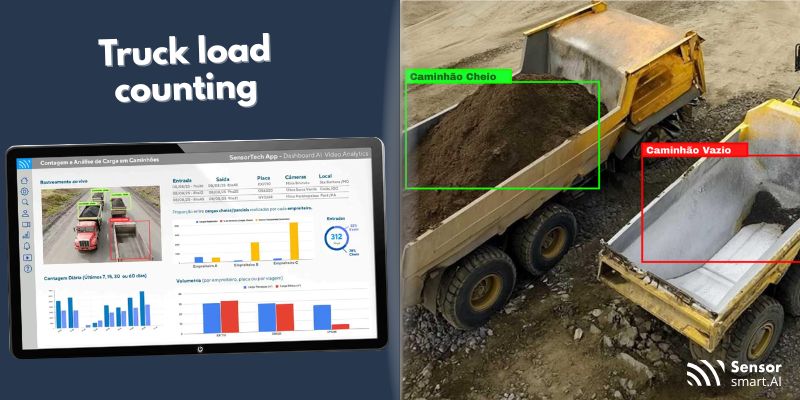
Technology is leading a quiet revolution in the transportation and logistics sector, and truck load counting is no longer the same. With the implementation of artificial intelligence (A.I.) systems, it is now possible to achieve unprecedented levels of efficiency, security, and operational control. Among the main features of these technologies are License Plate Recognition (LPR), and even image-based analysis to determine whether trucks are loaded or empty.
Features of A.I.-Driven Truck Load Counting Systems
One of the main functionalities of modern load counting systems is License Plate Recognition (LPR). Through this technology, vehicles entering and exiting a location have their plates automatically logged into a database, allowing for:
- Automated access control to restricted zones.
- Authorization or restriction of movements based on pre-configured permissions.
This functionality guarantees both security and greater logistical control, eliminating bottlenecks and human errors in recording entries and exits.
Identification of Characters
A.I. systems can also identify logos or marks on truck bodies. This feature is particularly useful in scenarios such as:
- Monitoring the correct use of vehicles from contracted firms.
- Automatically classifying trucks based on type, operator, or visible markings.
This technology increases transparency and control in long-term contracts, helping to eliminate misuse or fraud.
Detection of Loaded or Empty Trucks
Operational efficiency is a constant challenge for companies relying on heavy transportation. Through image and video analysis, A.I. systems can determine whether a truck is loaded or empty, helping to:
- Identify underutilized vehicles.
- Verify in real time whether tasks like loading and unloading are properly executed.
- Reduce costs and boost productivity.
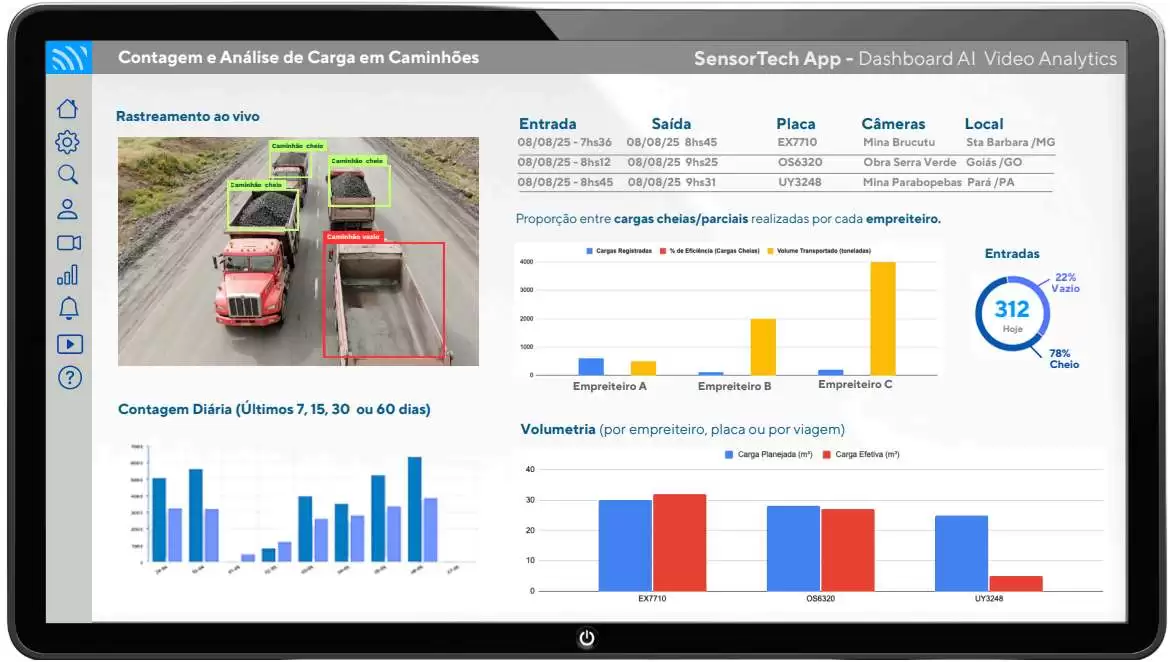
Customizable Dashboards and Reporting
Providing real-time information is another key benefit of these systems. Dashboards include the ability to:
- Track the number of trips, identify vehicles on the move, monitor operational hours, and assess transported load levels.
- Filter data by day, time, load type, or transporters.
- Configure alerts for operational deviations, such as delays, suspected fraud, or overloads that may pose risks.
Applications of Truck Load Counting Systems
- Mining Sites: Used in areas where minerals are extracted, ensuring proper monitoring of trucks arriving empty and leaving fully loaded with extracted materials.
- Quarries and Sand Pits: Logistic control for hauling rocks, sand, or gravel, frequently used in these operations.
- Large Construction Sites: Essential for managing materials like earth, concrete, and debris on large infrastructure projects such as highways or railways.
- Asphalt or Concrete Plants: Monitoring raw materials such as gravel and sand while managing the dispatch of asphalt or concrete products.
- Grain Terminals and Ports: The technology also optimizes the movement of bulk materials, such as grains, coal, and fertilizers.
- Composting and Construction Recycling Centers: Efficiently tracking construction residues, debris, and earth for processing.
- Sanitary and Industrial Landfills: Better management of truck traffic transporting solid waste in large volumes.
Features of a Truck Load Counting System with A.I.
- LPR (License Plate Recognition): Automatically registers vehicle plates as they enter or leave an area. Access control systems can approve or deny movement based on recognized plates.
- Load Detection (Full or Empty): Analyzes images or videos to check whether a truck is loaded or empty. Optimizes operations by identifying proper loading/unloading activities.
- Results Dashboard: Custom reports showing data like trips completed, vehicle identification, operation hours, load levels, allocated contractors, etc. Includes filters for parameters such as date, time, load type, transport company, or driver. Real-time alerts notify on delays, fraud, or overloads.
An International Study Validating the Benefits
A relevant study titled “Automatic Intermodal Loading Unit Identification using Computer Vision: A Scoping Review“ explores in depth how computer vision is transforming logistics. This technology, a subset of artificial intelligence, allows for automated analyses, such as load counting and verifying the operational status of trucks in industrial environments.
The results from the study indicate that companies adopting automated monitoring systems can reduce operational costs, eliminate redundant processes, and significantly improve safety and reliability in their logistics operations.
Conclusion
International studies confirm that this technology is not just a trend but a critical step for companies aiming to remain competitive. In today’s world, marked by productivity and sustainability challenges, solutions like these are more than welcome they are essential.