


Timelapse, a technique that compresses long periods into just a few seconds of video, has gained prominence in recent years by captivating audiences with impressive images and breathtaking scenes. In addition to being highly popular among photographers, filmmakers, and advertisers, it has found significant applications in areas such as environmental sciences, education, and technology. This approach not only translates the passage of time in a visually appealing way but also provides new means of interpreting the world around us.
Advancements in capture and editing technologies have expanded the creative potential of timelapse. Today, timelapse videos are accessible even to amateur users who rely on smartphones as their primary tool. At the same time, researchers have innovated by applying this technique to study areas such as environmental monitoring and 3D reconstruction of landscapes over time, as exemplified in the international study.
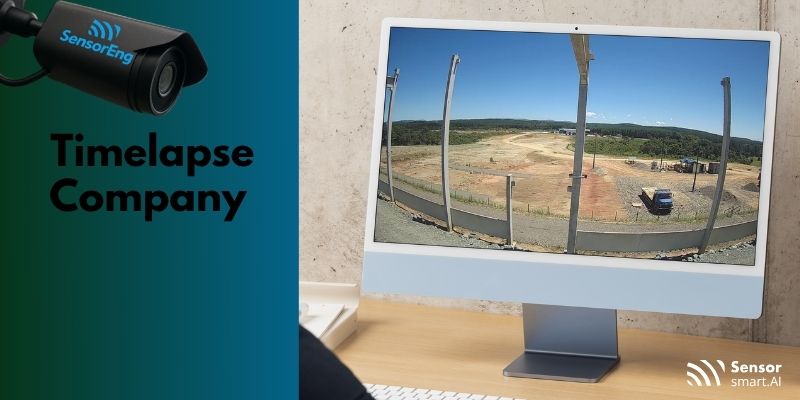
Timelapse: What It Is and How It Works
The timelapse technique involves capturing a sequence of images at regular intervals, which, when assembled into a high-speed video, condenses long periods of time into just a few seconds or minutes. This method allows us to visualize the slow or imperceptible passage of time, such as a plant blooming, stars moving across the night sky, or even climatic changes in an urban setting.
The basic steps to create a timelapse include:
- Selecting the ideal interval between captures, depending on the movements of the object or scene.
- Setting up the camera (or smartphone) to automatically capture photos at regular intervals.
- Using editing software to assemble a video with the collected frames.
However, with technological advances, modern cameras, drones, and AI-powered software have significantly simplified the process, allowing for excellent results even for beginners.
The Technological Evolution and Possibilities of Timelapse
The market for timelapse-oriented technologies has grown exponentially in recent years. Smartphones now feature specific modes for capturing timelapses, and professional cameras come equipped with functions to automate the procedure. Advanced software, such as Adobe Premiere and Final Cut Pro, provides tools for editing, color correction, and stabilization to create cinematic-quality results.
Moreover, the use of drones has enabled unprecedented approaches to capturing landscapes. The combination of drones with 3D image processing software, such as the one used in the study, has made it possible to reconstruct complex structures from globally shared photographs. This strategy not only reduces costs but also enhances our understanding of historical and geographical scenarios.
For example, the aforementioned study, developed by researchers at the University of Washington, introduced an innovative method to reconstruct 3D models using online-shared photos. These models supported initiatives such as monitoring landscape erosion and climate change, proving that timelapse goes beyond the creative field and finds practical applications in scientific studies.
Practical Applications of Timelapse
1. Environmental Sciences
Timelapse is widely applied in monitoring environmental changes, such as glacier retreat, deforestation, and the evolution of urban landscapes. Research using this technique helps raise public awareness and facilitates the planning of effective environmental policies.
For instance, by documenting Arctic glacier reduction over decades, scientists can provide irrefutable visual evidence of climate change. These videos carry a powerful emotional appeal and are often used in awareness campaigns.
2. Education
In educational settings, timelapse videos are powerful tools to illustrate complex concepts. From cloud formation to the growth of organisms under a microscope, this resource makes it easier to visualize phenomena that would otherwise be difficult to grasp.
3. Marketing and Promotions
Businesses have also widely adopted timelapse as a marketing tool. The construction of real estate projects, for example, is documented with timelapse to showcase the land’s transformation until the project’s completion. These techniques demonstrate innovation and creativity, generating increased interest in the target audience.
4. Art and Entertainment
Finally, art is one of the greatest beneficiaries of the evolution of this technique. Content creators and photographers use timelapse to compose breathtaking visual scenes, often employing effects like star trails or capturing the northern lights.
The Impact of the Study “3D Time-Lapse Reconstruction”
Conclusion
Timelapse is not just a technique for capturing images it’s a powerful tool that brings together art, science, and technology. Thanks to advancements in the accessibility of modern devices and software, anyone can explore this fascinating medium and create visually stunning projects. Furthermore, when combined with innovative solutions like those outlined in the study “3D Time-lapse Reconstruction from Internet Photos,” timelapse becomes a critical component for scientific research, environmental monitoring, and historical preservation projects.