


Introduction
In the construction industry, the constant pursuit of efficiency, transparency, and quality challenges engineers and project managers to innovate in their approaches to project oversight and administration. In this context, the timelapse camera has emerged as a key player by visually and objectively recording the complete progress of projects, from the foundation to handover.
The use of timelapse systems enables continuous monitoring, the generation of detailed visual documentation, and efficient communication with stakeholders, clients, and investors. Integrating this type of technology into project management not only optimizes processes but also enables more assertive decision-making and significant cost reductions.
What is Timelapse and How Does It Work
Timelapse is a photographic technique that captures images at regular intervals over a long period. Subsequently, these images are edited and transformed into a fast-paced video, condensing months or even years of work into just a few minutes of viewing.
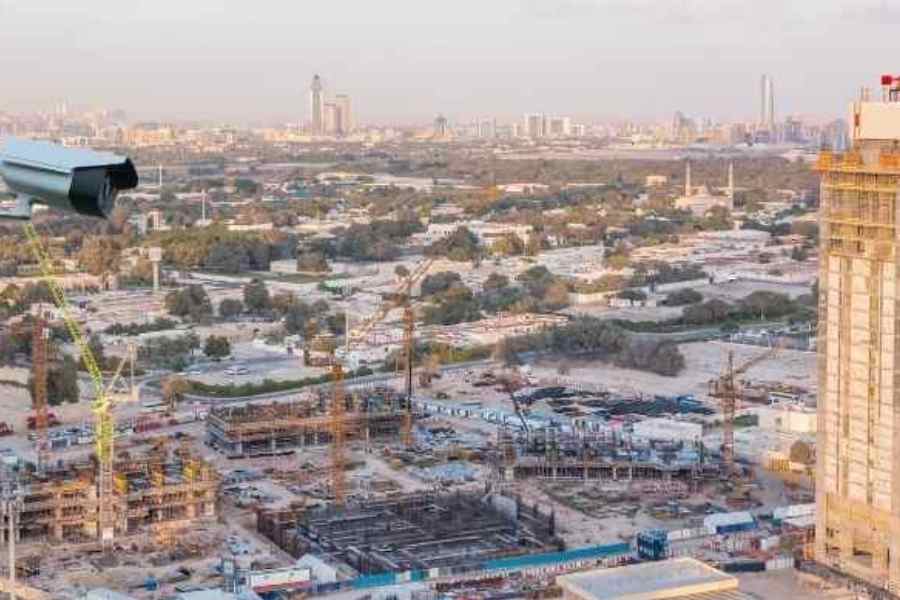
In the context of engineering projects, robust cameras, installed at strategic and weather-resistant points, record the daily progress of the project, enabling remote monitoring and making quality control easier.
Benefits of Timelapse for Project Management
1. Accurate Tracking of Project Progress
With timelapse cameras, it is possible to create a complete visual history of project progress. This enables clear visualization of construction stages and allows for the rapid identification of areas experiencing delays or failures to meet the schedule.
2. Cost Reduction and Increased Operational Efficiency
The ability to swiftly identify deviations and bottlenecks reduces rework and material waste. This agility in problem detection leads to lower costs and optimized use of resources. Data shows that long-term projects can generate up to 500GB of material per camera per year, highlighting the richness of the collected material.
3. Transparent Communication with Stakeholders
Timelapse videos can be shared with clients, investors, and remote teams, fostering complete transparency and strengthening trust in project management. This tool is also essential for marketing, allowing companies to present their differentiators and success stories in a compelling way.
4. Visual Documentation for Audits and Future Analyses
The visual record serves as valuable documentation for performance analysis, audits, resolution of contractual disputes, and ongoing process improvement.
Implementation Challenges
1. Adverse Conditions on Construction Sites
Dust, rain, intense sun exposure, and vibrations pose constant challenges for timelapse equipment. It is crucial to choose robust cameras with appropriate protection and self-sufficient energy systems, such as solar batteries and uninterruptible power supplies (UPS), to ensure quality and continuous capture.
2. Data Management and Storage
A large-scale project generates substantial volumes of images and videos. Efficient storage systems, with redundancy and backups, combined with cloud solutions, are fundamental to ensuring rapid and secure access to information.
3. Equipment Maintenance and Monitoring
Technical failures, power fluctuations, or connectivity issues require the implementation of protocols for constant camera monitoring and regular assessment of generated data integrity.
International Study: Timelapse and Gains in Project Management
A significant international study conducted by the University of Reading (United Kingdom) demonstrated that the adoption of timelapse in construction projects can reduce the total execution time of works by up to 15%, mainly due to improved communication and rapid identification of scheduling problems. The study also highlighted increased client satisfaction, with clients feeling more involved and informed about the progress of the project.
Other research published on the arXiv platform (“ConstructAide: Analyzing and Visualizing Construction Sites through Photographs and Building Models”) reported the use of 3D models and computer vision algorithms to analyze project progress from collections of timelapse photos, making the process even more technical and precise.
In Brazil, academic work has explored the integration of timelapse with other technologies such as BIM and drones (RPAs), substantially increasing the accuracy of monitoring reports and enhancing the assertiveness in project management.
Integrating Timelapse into Project Management Systems
Integrating timelapse into the daily routine of project management involves more than just installing cameras: it is essential to clearly define objectives, placement points, capture intervals, and communication processes between areas.
The captured data can also be integrated into analysis software, control dashboards, and automated reports, providing detailed performance analyses and supporting future planning.
Conclusion
The timelapse camera is transforming the way construction projects are managed. By offering remote monitoring, continuous visual documentation, improved communication, and cost reduction, this technology has consolidated its position as a strategic tool for project management in the construction industry.
International and national studies confirm expressive gains in efficiency and transparency, showing that construction companies and developers who invest in this innovation set themselves apart in an increasingly demanding market.
For those seeking to elevate their delivery standards and optimize processes, integrating timelapse cameras into project management is undoubtedly a high-impact competitive differentiator.