


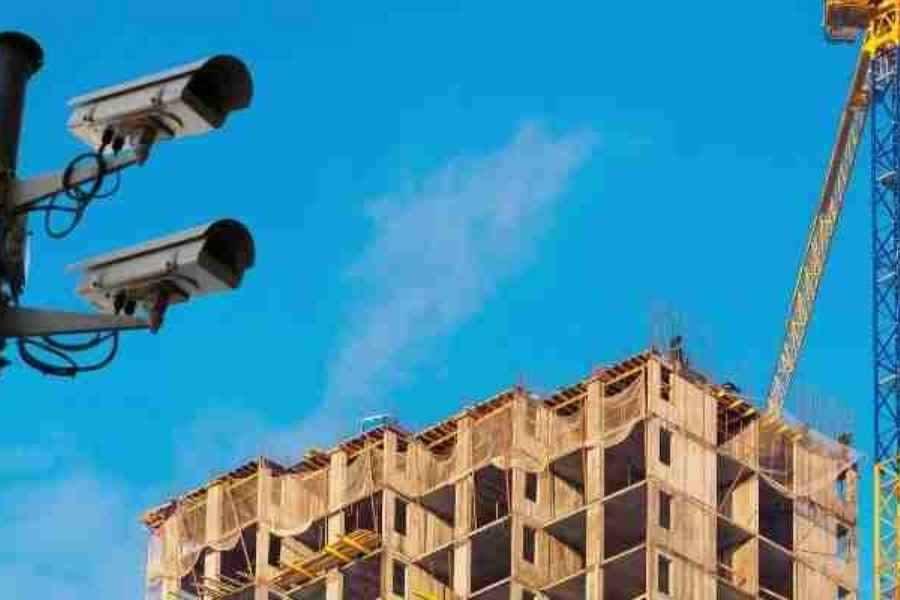
In the world of construction, monitoring the progress of works with precision is essential to ensure strict adherence to schedules and budgets. Traditionally, this monitoring was carried out through frequent site visits and manual report consultations—a time-consuming process prone to errors. Faced with this challenge, technology has brought an innovative and visually powerful solution: the timelapse camera for construction sites. In this article, we will explore how this tool is changing the game in progress analysis, providing transparency, efficiency, and better results for projects of all sizes.
What Is a Timelapse Camera for Construction?
Timelapse technology consists of capturing sequences of images at regular intervals over an extended period. Later, these images are compiled into an accelerated video, allowing months of construction to be viewed in just a few minutes. For construction sites, timelapse cameras are designed for continuous operation, usually powered by solar energy and connected via 4G, making remote access to the images easy and uninterrupted.
Choosing the Ideal Equipment and Configuration
To achieve maximum quality and efficiency in progress analysis, camera selection is crucial. It is recommended to choose cameras with 4K resolution, suitable lenses, excellent light sensitivity, robust storage systems, and weather protection. Strategic placement—considering wide vision, lighting, and possible environmental changes—also directly impacts the quality of footage. The use of mobile tripods allows for dynamic tracking of linear projects and site changes. Modern systems offer remote access, cloud storage, and online monitoring, promoting image security and backup.
Advantages of Timelapse Cameras in Progress Analysis
Continuous and Detailed Visual Documentation
The greatest differential is the nonstop visual documentation of the construction site. Managers, engineers, and investors can follow each stage: from earthmoving to finishing. With daily, weekly, or monthly videos, it becomes simple to identify delays and bottlenecks and validate the quality of executed services.
Agile Decision-Making
Quickly identifying deviations between planned and executed activities allows for immediate interventions, avoiding costly rework and delays. Visual, personalized, and periodic reports facilitate communication with teams and clients, promoting total transparency.
Marketing Tool and Transparency
Timelapse videos captivate clients, investors, and prospects, making them excellent marketing tools. Presenting the evolution of the work in just a few minutes adds value to the brand and the developed projects, in addition to highlighting the company’s management capability.
Safety and Risk Management
Constant monitoring also serves as a security tool, enabling the rapid identification of unsafe practices and ensuring compliance with occupational safety guidelines.
Practical Applications and Use Cases
Timelapse cameras prove useful for any type or size of project, from residential buildings to large infrastructure works such as bridges, roads, and industrial facilities. Their flexibility allows each stage of the process to be captured, regardless of project complexity. The use is not restricted to construction monitoring alone but also extends to the monitoring of mining and industrial operations.
International Study: The Power of Visual Capture for Progress Analysis
The importance of progress analysis through images has been demonstrated in several international studies. One highlight is the scientific article “A volumetric change detection framework using UAV oblique photogrammetry – A case study of ultra-high-resolution monitoring of progressive building collapse.” This study presented a modern approach using drones and photogrammetry for visual monitoring of construction, showing that timelapse technology allows volumetric and structural changes to be identified with high precision, facilitating immediate adjustments in construction plans.
Another study, “3D Coverage Path Planning for Efficient Construction Progress Monitoring,” explored the potential of autonomous robots equipped with cameras to capture 3D images of sites, providing high-quality data for progress analysis. Both examples highlight the relevance, accuracy, and impact of timelapse technology in reducing costs and raising construction management standards.
Conclusion
The adoption of the timelapse camera for construction projects has become a game changer in progress analysis within the construction sector. Much more than providing impressive images, this solution promotes efficient management, detects bottlenecks, enables timely interventions, and reinforces communication with all stakeholders involved in the project. As confirmed by international studies, the technology adds value in terms of control, waste reduction, and improved results. Investing in this solution is a strategic decision for engineering and construction companies aiming to raise their standards of excellence, transparency, and customer satisfaction.