


Introduction
Technological evolution has been redefining the boundaries of civil construction and Construction Management. In a sector historically marked by challenges such as delays, waste, safety risks, and difficulties in quality control, investing in intelligent solutions is becoming increasingly indispensable. Among the main innovations of recent years is the use of monitoring cameras on construction sites.
Smart Construction Management: Why Do Monitoring Cameras Create a New Scenario?
Efficient Construction Management requires a comprehensive view of everything happening on-site: execution, entry and exit of materials, movement of teams, quality of completed stages, and compliance with safety regulations. Given the complexity and dynamic nature of projects, monitoring cameras have become strategic allies.
Real-time monitoring: Managers can remotely and at any time view everything happening on-site—from activity progress to schedule deviations and unauthorized visits.
Enhanced safety: Continuous recording and monitoring discourage unsafe practices, reduce material theft, prevent accidents, and facilitate investigations in case of incidents.
Quality control: Visual comparison between planned and executed allows for the detection of rework, failures, and improvement points before they generate higher costs.
Reduction of operational costs: Integrating images with management software optimizes resource allocation, prevents waste, and eliminates unnecessary work due to lack of reliable information.
How Does It Work in Practice?
Monitoring through cameras can take different approaches, from traditional systems with local recording to intelligent platforms based on cloud and artificial intelligence.
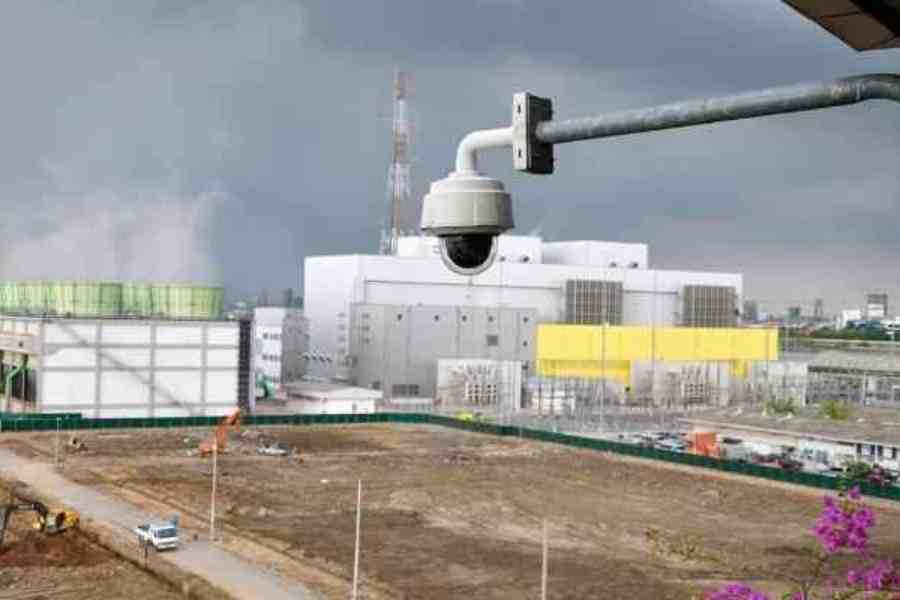
Fixed cameras: Strategically installed at critical points to capture permanent images of the most active areas, material stockpiles, and main entries.
Mobile monitoring (drones): Drones capture aerial images, making safety inspections and progress tracking easier in large areas, recording details impossible to notice from the ground.
These images, when integrated with construction management systems, promote automatic reporting, comparisons with schedules, visual monitoring of physical progress, and automated alerts about occurrences, as well as generating visual files that serve as evidence in legal or contractual claims.
International Studies Prove the Benefits
“Computer Vision for Construction Progress Monitoring: A Real-Time Object Detection Approach“
One of the most relevant advances occurred in an international academic study titled “Computer Vision for Construction Progress Monitoring: A Real-Time Object Detection Approach.”
The study proposes the use of YOLOv8, a state-of-the-art computer vision algorithm, to identify and track, in real time, elements and objects on the construction site.
The significant advantage lies in the precision and speed with which these tools can compile information, identify progress patterns or delays, safety failures, and even anomalies, such as different types of machinery in inappropriate locations. The results indicated:
-A significant increase in the accuracy of construction progress tracking.
-Delivery of relevant data for real-time strategic decisions.
-Optimization of time and reduction of costs for on-site inspections.
Beyond Control – Innovation and Transparency
Monitoring cameras on construction sites go beyond their traditional role of safety. Currently, they:
Facilitate audits: Archived images attest the faithful fulfillment of stages, crucial in contractual disputes.
Enhance communication: Clients and investors can follow progress in real time, creating a transparent relationship and strengthening the contractor’s credibility.
Help resolve conflicts: Doubts about deliveries, alleged delays, or damages are quickly solved based on incontestable visual records.
The implementation of smart cameras helps create a more collaborative environment, preventing litigation and increasing trust among stakeholders.
Tips for Successfully Implementing Construction Site Monitoring
Strategic Planning: Map risk areas and the most relevant monitoring points.
Integration with Management Systems: Maximize results by connecting cameras to construction management software for automatic reporting and data cross-referencing.
Team training: Ensure that professionals know how to utilize all the potential of the tool.
Evaluate technology: Prefer high-definition cameras with artificial intelligence features, remote access capabilities, and cloud integration.
Privacy and compliance policy: Pay attention to legal regulations governing the use of surveillance in work environments.
Conclusion
The use of monitoring cameras is now considered not just a trend but a necessity for modern and effective construction management. Technology delivers a new level of visibility, automation, and protection, revolutionizing the results of those who invest in innovation.
As demonstrated, visual monitoring—together with advanced software—positively impacts control of progress, quality, compliance with schedules, and worker safety. International studies, such as the one about YOLOv8, confirm the return on this investment, while national experiences validate its indispensable role in reducing waste, rework, and risks.
Companies aiming to stand out in the competitive construction sector should incorporate monitoring cameras as a central part of their Construction Management strategies. The result? Smarter, safer, more transparent, and more profitable projects!