


Introduction
Workplace safety is a top priority for companies of all sizes and sectors, especially in industries, construction, and other high-risk sectors. At the heart of this topic lies the use of Personal Protective Equipment (PPE), whose effectiveness depends not only on its quality but also on the correct and consistent use by employees. But how can we ensure that everyone uses exactly what each function requires during all stages of the work? In this scenario, technology especially Artificial Intelligence (AI) emerges as a great ally, providing innovative solutions to monitor PPE use in real time. Thus, the theme of “Accident Prevention” reaches a new level of effectiveness, reducing risks and saving lives.
The Role of PPE in Accident Prevention
PPE refers to devices or garments specifically designed to protect workers against threats to their physical safety and occupational health. The most common include helmets, protective eyewear, gloves, hearing protectors, vests, and safety shoes. Their use is mandatory in several sectors, supported by regulations such as NR 6 from the Brazilian Ministry of Labor.
According to data from the International Labour Organization (ILO), every 15 seconds a worker dies due to occupational accidents or illnesses totaling approximately 2.3 million deaths every year. This alarming number highlights the impact of failures in accident prevention, especially when related to non-use or inadequate use of PPE.
Challenges of Manual Monitoring and the Importance of Innovation
Historically, the control of PPE use has been carried out through in-person inspections, paper records, and periodic checklists. In addition to consuming time and resources, these methods are prone to human error and do not enable real-time monitoring, especially in environments with many employees or large areas. These gaps can compromise safety, exposing workers to accidents that could have been prevented by stricter monitoring.
For these reasons, companies are seeking to innovate by utilizing more advanced technological resources, capable of increasing monitoring efficiency and advancing Accident Prevention practices.
Detection of PPE by Artificial Intelligence: How Does It Work?
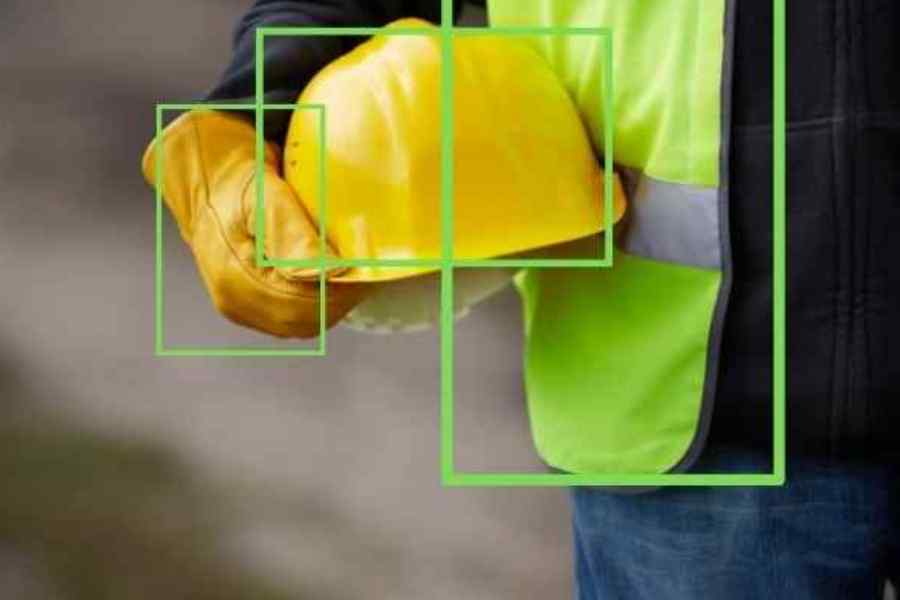
The automatic detection of PPE use is already a reality thanks to Artificial Intelligence combined with computer vision systems. The principle is simple: cameras installed at strategic points capture images or videos of employees at work. These images are processed by software trained to visually identify whether workers are using the mandatory PPE for a given activity.
The great advantage is that these systems can issue automatic alerts in cases of non-compliance alerting, for example, if an employee is without a helmet, a reflective vest, or protective eyewear. As a result, corrective actions can be taken immediately, mitigating risks and preventing accidents before they happen.
Among the main benefits of intelligent PPE detection are:
-Real-time monitoring
-Reduced costs from accidents and absenteeism
-Increased worker awareness
-Automatic recordkeeping for audit and legal compliance
-Pattern identification for process adjustments and training
According to a report by Frost & Sullivan published in 2021, digitalizing PPE monitoring could reduce accidents by up to 25% by 2025, increasing productivity and safety.
International Study: High Accuracy in Visual PPE Detection
Researchers have been investing in refining this technology. In a recent study published as “Visual Detection of Personal Protective Equipment and Safety Gear on Industry Workers,” a computer vision-based system was presented that can automatically recognize five types of PPE: helmet, safety vest, gloves, protective glasses, and hearing protection. The distinguishing factor of this system is its precision: accuracies of up to 99% at a distance of 3 meters and 89% at 5 meters from the worker were recorded.
This result shows the technology is already ready to support large-scale industrial operations, reliably identifying risk situations and failures in equipment use.
Benefits of Accident Prevention with Intelligent PPE Detection
The adoption of automatic PPE detection systems brings benefits that go beyond simple legal compliance:
Quick and preventive actions: Instant alerts upon identifying employees without proper PPE.
Reduction of human error: Less dependency on supervisors and auditors; more assertiveness in observation.
Data analysis and reporting: Facilitates internal and external audits and identifies training needs.
Organizational climate: Reinforces the safety culture and values the worker.
Additionally, such initiatives contribute to the reduction of indirect costs, such as absenteeism, legal indemnities, and reputational damage from reported accidents.
Challenges and Ethical Considerations
Despite the benefits, the implementation of these systems requires caution regarding workers’ privacy, as the use of cameras and algorithms can raise ethical concerns. It is crucial that companies establish clear and transparent policies about data collection and use, while engaging with staff about the benefits and protections regarding image and privacy.
Conclusion
Automatic PPE detection with the aid of Artificial Intelligence represents more than a trend—it is a revolution in Accident Prevention, bringing companies a more efficient, transparent, and proactive approach to protection. Investing in this type of technology means valuing life, optimizing processes, and ensuring the sustainability of operations.
The future of occupational safety is digital, and those who embrace innovation will always be a step ahead in protecting the most valuable asset of any organization: its people.