


Introduction
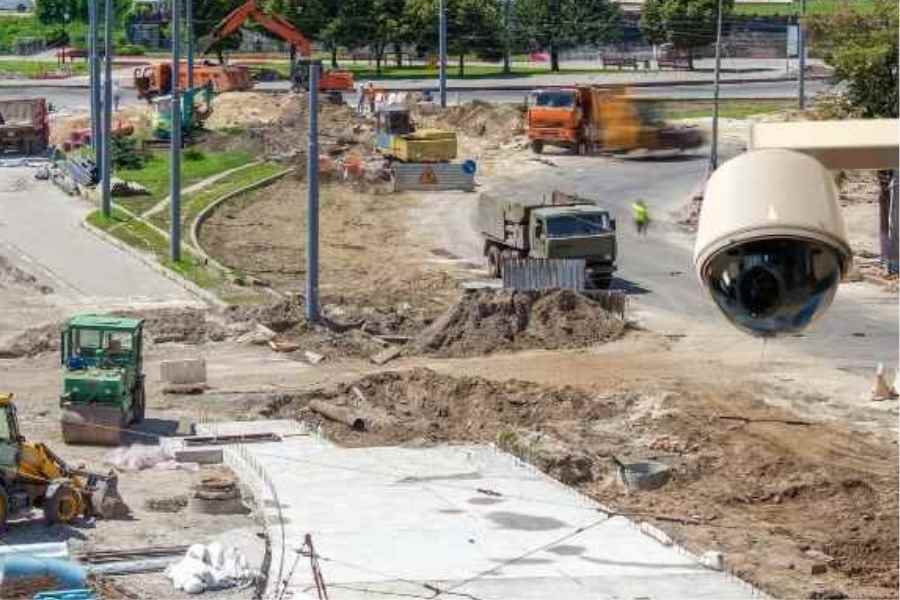
Modern management in civil construction increasingly depends on visual data to ensure transparency, efficiency, and assertive communication throughout all stages of a project. In this scenario, Visual Documentation stands out as a strategic and essential tool, assisting in everything from daily monitoring to institutional promotion. Among the technological solutions that have revolutionized this process, Timelapse Cameras stand out, offering an accelerated view of the project’s progress, making each part of the construction not only recorded but also easily auditable and shareable.
This article explores how timelapse cameras add value to the visual documentation of construction projects, their practical benefits, applications in various contexts, and references to international studies that demonstrate the effectiveness of the method.
What Is a Timelapse Camera and Why Does It Matter for Visual Documentation?
Timelapse cameras are devices programmed to capture images at regular intervals over weeks or months. With this, sequences are created that, when played back at high speed, show the entire evolution of the project from start to finish in just a few minutes. For the Visual Documentation of construction, this is a remarkable advancement: every stage is accurately recorded, from the site preparation to final delivery.
This technique is especially beneficial for monitoring large projects, complex renovations, and interventions in hard-to-access locations, where the continuous presence of inspectors or engineers is unfeasible or costly. Companies report significant gains in process optimization and greater security in decision-making by using timelapse images, as both managers and clients can access progress at any time.
Main Benefits of Visual Documentation with Timelapse in Construction Projects
1. Remote and Transparent Monitoring
The main strength of timelapse cameras is that they allow remote, real-time monitoring of construction sites. Managers, investors, and technical teams can check the status of activities without frequent visits, saving time and resources. Moreover, this transparency contributes to alignment among all stakeholders.
2. Early Problem Identification
Visual recording facilitates constant review of the project schedule. This way, possible deviations, quality issues, or safety failures are revealed in the sequences and can be corrected in a timely manner. The visual evidence also supports dispute resolution and auditing processes with regulatory authorities.
3. Marketing and Engagement
Beyond technical benefits, timelapse videos are powerful marketing tools: they captivate clients, investors, and even the general public on social media by strikingly showing the transformation of a space. For construction companies, these videos enhance their portfolio and reinforce their image of innovation and efficiency.
4. Historical Record and Knowledge Management
Visual Documentation with timelapse serves as an historical archive, allowing comparison of stages from different projects and accumulating experience for future jobs. This visual database becomes a valuable collection for training and continuous improvement of internal processes.
Practical Applications: Where to Use Timelapse Cameras in Construction
Large infrastructure projects: Bridges, hospitals, and commercial buildings benefit from the detailed monitoring of each phase.
Renovations, restorations, and urban interventions: Timelapse allows for impactful “before and after” documentation of rejuvenated areas.
Managing multiple sites: Companies overseeing simultaneous builds have a consolidated visual overview by centralizing images.
International Study: Efficient Planning for Visual Site Monitoring
A relevant international study on this topic is “3D Coverage Path Planning for Efficient Construction Progress Monitoring” by Katrin Becker, Martin Oehler, and Oskar von Stryk. They investigated how automation and robotics improve construction site coverage to ensure that the progress recorded in images matches the original project plan.
In this study, autonomous mobile robots equipped with 360-degree cameras and LiDAR sensors traverse complex, multi-level spaces, documenting every detail of construction evolution efficiently and uniformly. The three-dimensional planning of these robots’ routes ensured greater surface coverage of the project and significantly reduced monitoring time compared to conventional methodologies. Results showed shorter paths and more accurate visual data, supporting both safety and quality control.
The use of robotics and artificial intelligence is already a reality on European and North American construction sites, with a growing trend toward adoption in major projects worldwide. Combining traditional timelapse with automated solutions further enhances visual documentation, making it even more strategic.
Conclusion
The timelapse camera has become an indispensable ally for modern visual documentation in civil construction. The benefits range from remote monitoring to institutional promotion, cost savings, and faster decision-making. International studies reveal that the future of site monitoring combines these solutions with automation and artificial intelligence, further increasing the precision and efficiency of records.
Adopting timelapse cameras is, therefore, an investment in intelligent project management, strengthening credibility with clients, and creating a visual legacy of buildings. In an increasingly competitive market, innovative Visual Documentation tools are becoming decisive differentiators for construction companies and developers pursuing excellence, transparency, and a forward-looking vision.