


Introduction
In an increasingly competitive retail scenario, supermarkets constantly need to invest in innovation to ensure operational efficiency and meet customer demands. In this context, Shelf Monitoring emerges as a crucial technology for the success of the sector. The control of shelves hether to avoid stockouts, reduce losses, or always keep products available for customers is being revolutionized by solutions that use artificial intelligence (AI), computer vision, RFID, and robotics. In this article, you will understand how shelf monitoring has become a key component in the operation of modern supermarkets, learning about its technologies, benefits, challenges, and future prospects.
What Is Shelf Monitoring?
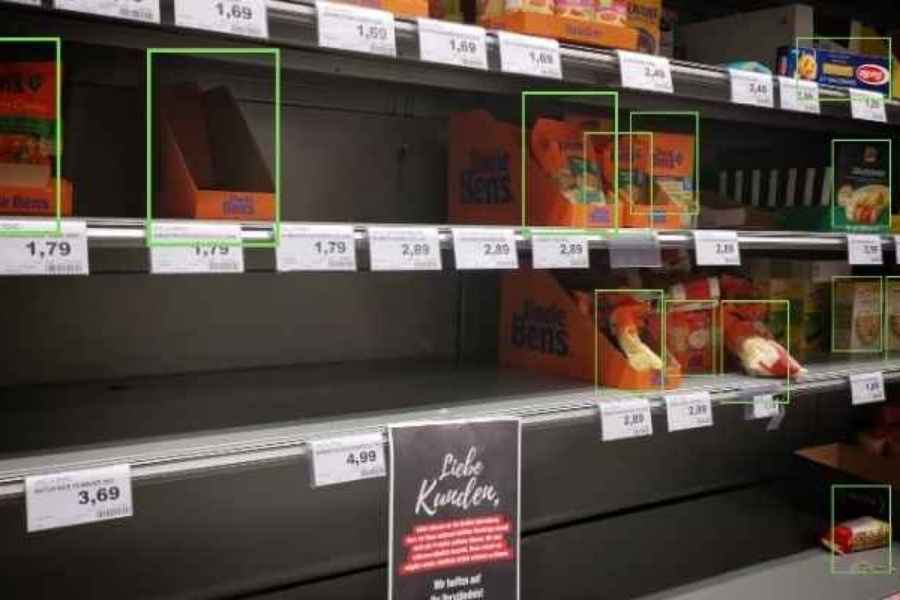
Shelf monitoring consists of real-time tracking of product availability on supermarket shelves. Traditionally, this process was performed manually a laborious task, susceptible to human error and inefficiency. Now, with new technologies, it is possible to quickly identify missing products, empty spaces, or misplaced items, all through automated solutions.
This control is essential because it prevents stockouts a situation in which a customer looks for a product that is not available, generating frustration and lost sales. Globally, empty shelves caused a loss of $82 billion for retailers in 2021, according to a NielsenIQ study, showing how small failures can turn into significant financial losses.
Technologies Revolutionizing Shelf Monitoring
Artificial Intelligence and Computer Vision
The use of AI and computer vision has gained prominence worldwide. Companies like Google have developed systems that use smart cameras to capture images of shelves and, through sophisticated algorithms, analyze product availability in real time. When detecting a missing or misplaced item, the system automatically sends alerts to restocking teams, who can act faster and more efficiently.
Radio Frequency Identification (RFID)
Another significant advancement comes from RFID technology. With tags and sensors placed on products and shelves, the system can track the movement of items and even detect customer behavior in front of the shelves. An international study entitled “Monitoring Browsing Behavior of Customers in Retail Stores via RFID Imaging” proposed the use of the TagSee system, which creates digital images of consumers’ interactions with the shelves using RFID signals.
This possibility opens new doors for behavioral analysis and better decision-making regarding product placement and assortment.
Robotics and Automation
Autonomous robots equipped with sensors and cameras roam the aisles, detecting not only empty shelves but also misplaced products and items nearing expiration. These solutions dramatically increase inventory control accuracy and free employees for more strategic activities.
Main Benefits of Automated Shelf Monitoring
Reduction of Stockouts: Automated systems can reduce stockouts by up to 90% in supermarkets, according to GIC Brazil data.
Increased Productivity: Automating these tasks can boost productivity in food retail by up to 87%.
Improved Customer Experience: Well-stocked shelves ensure that customers find what they are looking for, increasing satisfaction and loyalty.
Optimized Inventory: With real-time monitoring, inventory management becomes more precise, reducing waste and improving store space usage.
Loss Reduction: It becomes possible to act quickly against the deterioration of products near expiration, using promotional strategies and avoiding unnecessary waste.
Relevant International Study
The international study “Monitoring Browsing Behavior of Customers in Retail Stores via RFID Imaging” has demonstrated in practice how RFID technology can not only monitor the presence and actions of customers but also generate valuable data on product display highlights, consumer interest levels, and even real-time promotional performance.
This data intelligence allows supermarkets to immediately adjust assortment and shelf layouts, optimizing sales.
Challenges in Implementing Shelf Monitoring
Despite the benefits, implementing these technologies is not without challenges. The main ones include:
-High initial investments, especially for small and medium-sized businesses.
-Integration with existing ERP and inventory systems.
The need for training and adaptation of employees to new systems.
-Even so, the market is expanding rapidly: it is estimated that the automated shelf monitoring segment, valued at $3.31 billion in 2023, could reach $10.62 billion by 2030, with annual growth of 24.2%.
Conclusion
Shelf control and Shelf Monitoring are cornerstones of efficiency in modern supermarkets. With the use of AI, RFID, and robotics, the sector is overcoming traditional limitations, reducing losses and manual restocking, and raising the standard of customer service. The investment may be challenging, but the gains in productivity, reduction of stockouts, and improved customer experience more than justify the adoption of these solutions. The future has already arrived for retail, and it is intelligent, efficient, and data-driven.