


Introduction
Workplace safety is a non-negotiable commitment, especially in high-risk sectors such as construction, mining, and heavy industry. The proper use of Personal Protective Equipment (PPE) is essential for workers’ health and integrity. However, ensuring the correct and consistent use of this equipment is still a challenge for many companies.
In this context, Image Recognition technology emerges as a transformative ally. By integrating Artificial Intelligence (AI) and monitoring cameras, intelligent systems can identify, in real-time, whether employees are properly protected. This technological revolution not only raises safety standards, but also optimizes processes and significantly reduces accident risks. In this article, we will explore how Image Recognition is changing workplace safety, detailing its applications, benefits, and presenting an international study relevant to the topic.
What It Is and How It Works in Workplace Safety
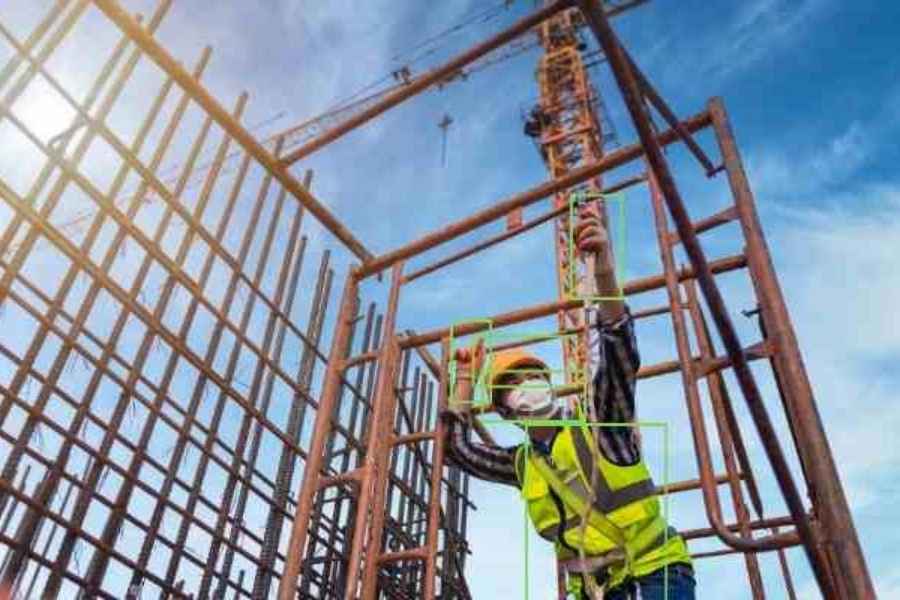
Image Recognition is a subfield of artificial intelligence focused on “computer vision”: teaching machines to see, interpret, and make decisions based on photographs or video images, just as humans do. In the context of occupational safety, sophisticated algorithms analyze real-time video from cameras installed in industrial areas or worksites. They detect patterns and identify whether a worker is using mandatory PPE, such as helmets, gloves, protective glasses, reflective vests, and masks.
If an irregularity is detected, the system automatically sends alerts to supervisors, allowing for immediate interventions. The main advantages include:
Continuous monitoring: The system operates 24/7, unlike sporadic manual inspections.
Reduction of human error: Automation eliminates inspector subjectivity and distraction.
Quick response: Instant alerts enable immediate correction, minimizing risks.
Legal compliance: Facilitates compliance with regulatory requirements, avoiding fines or sanctions.
Proven Impact – International Study on Automated PPE Detection
The use of Image Recognition in PPE detection is not just promising; it already delivers concrete results proven by internationally renowned studies. One such study is the article “Visual Detection of Personal Protective Equipment and Safety Gear on Industry Workers,” published by Karlsson et al. in 2022.
In this study, researchers used YOLOv4, one of the most advanced object detection algorithms, to automatically identify five different types of PPE: helmet, safety vest, gloves, protective glasses, and hearing protection. The results were impressive: the system achieved a precision rate (mAP) of 99% at distances up to 3 meters, and 89% at 5 meters between the camera and the worker. This demonstrates remarkable effectiveness for industrial environments, showing the technology can reliably identify the correct (or missing) use of PPE.
Benefits of PPE tracking:
Operational efficiency: Reduces the need for constant manual inspections, freeing up the team for more strategic activities.
Cost reduction: Accident prevention decreases expenses with leave, compensation, and medical treatments.
Enhanced corporate image: Demonstrating responsibility with safety strengthens the company’s reputation and attracts more qualified talent.
Challenges, Ethics, and the Future of the Technology
Although the advances are impressive, implementing Image Recognition in PPE detection faces important challenges:
Privacy: It is essential to ensure that image collection and use respect legislation and workers’ individual rights. Transparent use focused exclusively on safety is fundamental.
Variable conditions: Algorithms need continuous training to recognize PPE in various positions, lighting, or atypical situations, such as partially covered masks.
Adaptation to changes: New models or colors of PPE may require updating databases and retraining AI systems.
The future of the technology promises even greater integration: sensors attached to PPEs, behavioral analysis by AI, and integration with occupational health and safety management systems are among the trends.
Conclusion
Image Recognition represents the cutting edge in promoting safer workplaces, especially in the automated detection of PPE use. The technology provides constant monitoring, rapid alerts, and reliable data, allowing companies to proactively prevent accidents and comply with regulatory standards. The international studies presented prove the effectiveness and transformative potential of these solutions, already recognized and adopted by major industries. However, to ensure success, it is essential that companies invest not only in technology but also in ethical and transparent usage policies.
Investing in Image Recognition for PPE detection is not just a trend it’s a fundamental step toward a safer, smarter, and more humane workplace.